
Not all robotic pool cleaners are built to handle every kind of debris equally. Some struggle with heavy leaf loads, while others might miss the ultra-fine dust that clouds your pool water. Whether you own a pool near trees, live in a dusty area, or experience both, choosing the right robotic cleaner can make maintenance dramatically easier.
This post explores the types of debris most commonly found in residential pools, how robotic cleaners work to address each, and how you can get the most out of your investment—whether it’s by choosing the right model or the right filter.
🟦 Recommended Reading: Do Robotic Pool Cleaners Work in All Types of Water?
Types of Debris You Might Face
Large Debris (Leaves, Petals, Twigs)
Found in pools near trees, shrubs, or after storms
Starts floating but sinks if not caught quickly
Can clog smaller filters or intakes if not designed for large debris
Fine Debris (Sand, Dust, Pollen, Silt)
Enters via wind, users’ feet, or nearby construction
Quickly settles on the pool floor and is hard to see
Requires ultra-fine mesh filters to capture and strong suction to dislodge
Mixed Debris Environments
Common in suburban or wooded areas
You’ll find large leaves and fine particles at the same time
Requires a versatile cleaner that can switch filters or use dual-stage filtration
🟦 Recommended Reading: What Micron Ratings Really Mean in Pool Cleaner Filters
Can a Robotic Pool Cleaner Pick Up Leaves?
Yes, once the leaves have sunk. Makers rate their pool cleaners for large debris such as leaves on the floor, and for leaves on the walls, the steps or the waterline when the maker lists those surfaces among the ones it cleans. What a robot cannot do is chase leaves that are still floating. That is a skimmer’s job, because a skimmer takes leaves off the surface before they soak through and sink. The guide to robotic leaf skimmers explains how they work, and the post on running a robotic pool cleaner alongside a leaf skimmer covers using the two together.
Once the leaves are on the floor, three specs decide how a robot copes with a heavy load. The first is how the filter comes out. A filter that lifts out from the top is quicker to empty when it fills, so stopping to clear it takes less of your time. The second is the mesh of the main filter, because it affects how long water keeps flowing through it while leaves pile up. The third is the flow rate, which is how much water the pump moves and what draws leaves into the intake. The table below does not list basket capacity, so basket size cannot be compared from one robot to the next, and the picks that follow rely on these other specs instead.
Robotic Pool Cleaners for Leaves: One Pick per Tier
These four are pool cleaners whose filter comes out from the top. Within each tier they were chosen by the coarsest main filter, then flow rate, then the surfaces cleaned, so there is one pick per tier. All four are listed for large debris, and the table has no basket capacity, so neither of those can separate them.
Aiper Scuba SE is the Budget tier pick. Aiper lists it for above-ground pools up to 860 square feet, and it is not rated for inground pools. It has a 180-micron main filter and a flow rate of 1,200 gph. Its main limit is that it cleans the floor only, so leaves on the walls or at the waterline are left for you to brush or net. Aiper quotes up to 1.5 hours per charge.
Wybot C1 is the Mid Tier pick, an inground pool cleaner. Wybot lists the floor, walls, waterline and steps among the areas it cleans, with a 180-micron filter and a flow rate of 3,038 gph. Its limit is that single filter, which Wybot pairs with no fine filter, so it is meant for leaves and sand rather than fine dust. Wybot rates it for pools up to 1,615 square feet, with up to 2.5 hours per charge.
Aiper Scuba S3 is the Premium tier pick, an inground pool cleaner for the floor, walls and waterline. Aiper lists a 180-micron main filter and a flow rate of 4,800 gph. Aiper also fits a 3-micron fine filter for dust. Its limit is that Aiper does not list steps among the areas it cleans. It runs up to 3 hours per charge and takes 4 hours to recharge, according to Aiper.
Aiper Scuba X1 Pro Max is the Pro tier pick, an inground pool cleaner that Aiper rates for pools up to 3,230 square feet. Aiper lists the floor, walls, waterline, steps and the water surface among the areas it cleans, the longest list of the four. It pairs a 180-micron main filter with a flow rate of 8,500 gph. Aiper quotes up to 5 hours of floor cleaning per charge.
The table below lists every pool cleaner whose filter comes out from the top, with filters for pool type, tier and what each one cleans.
Pool Cleaners With a Top-Access Filter
| Check Price | Brand and Model | Pricing Tier | Main Filter | Flow Rate | Cleaning Modes |
|---|---|---|---|---|---|
| Check Price | Dolphin Nautilus CC | Premium | 4000 gph | Floor, Wall | |
| Check Price | Dolphin Nautilus CC Plus | Premium | 4500 gph | Floor, Wall | |
| Check Price | Aiper Scuba S1 | Premium | 180 μm | 4200 gph | Floor, Wall, Waterline |
| Check Price | Wybot C1 | Mid Tier | 180 μm | 3038 gph | Floor, Wall, Waterline |
| Check Renewed Price | Aiper Scuba S1 Pro | Pro | 180 μm | 4800 gph | Floor, Wall, Waterline |
| Check Price | Dolphin Nautilus AG | Premium | 4000 gph | Floor | |
| Check Price | Aiper Scuba SE | Budget | 180 μm | 1200 gph | Floor |
| Check Price | Beatbot AquaSense 2 | Pro | 150 μm | 5500 gph | Floor, Wall, Waterline |
| Check Price | Wybot C2 | Premium | 180 μm | 3592 gph | Floor, Wall, Waterline |
| Check Price | Zyerch SAT20 | Mid Tier | 300 μm | 4800 gph | Floor, Wall, Waterline |
| Check Price | Dolphin Proteus DX4 | Pro | 4000 gph | Floor, Wall, Waterline | |
| Check Price | Beatbot AquaSense | Premium | 150 μm | 5500 gph | Floor, Wall, Waterline |
| Check Price | Poolmate Hydro 4 SE | Premium | 180 μm | 5070 gph | Floor, Wall, Waterline |
| Check Price | Polaris Freedom | Pro | Floor, Wall, Waterline | ||
| Check Price | BotLife PC10 | Mid Tier | 180 μm | Floor, Wall, Waterline | |
| Check Price | Poolmate Hydro 4 Cordless | Premium | 180 μm | 5070 gph | Floor, Wall, Waterline |
| Check Price | Dolphin Liberty 200 | Pro | 4000 gph | Floor, Wall, Waterline | |
| Check Price | Poolmate Hydro 4 Corded | Premium | 180 μm | 5070 gph | Floor, Wall, Waterline |
| Check Price | Rock&Rocker HJ3052 | Mid Tier | 180 μm | 4260 gph | Floor, Wall, Waterline |
| Check Price | Dolphin Escape | Premium | 4000 gph | Floor | |
| Check Price | Polaris F9450 Sport | Premium | 4000 gph | Floor, Wall, Waterline | |
| Check Price | Polaris VRX iQ+ | Pro | Floor, Wall, Waterline | ||
| Check Price | Aiper Scuba X1 Pro Max | Pro | 180 μm | 8500 gph | Floor, Wall, Waterline, Surface |
| Check Price | Reriou SAT30 | Premium | 250 μm | 4800 gph | Floor, Wall, Waterline |
| Check Price | Poolmate Hydro 3S | Premium | 180 μm | 6020 gph | Floor, Wall, Waterline |
| Check Price | Reriou SAT20 | Premium | 300 μm | 4800 gph | Floor, Wall, Waterline |
| Check Price | Dreame Z1 | Premium | 180 μm | 8000 gph | Floor, Wall, Waterline |
| Check Price | Koswe SAT20 | Mid Tier | 300 μm | 4800 gph | Floor, Wall, Waterline |
| Check Price | Polaris Freedom Plus | Pro | Floor, Wall, Waterline | ||
| Check Price | Dolphin Explorer E50 | Pro | 4000 gph | Floor, Wall, Waterline | |
| Check Price | Wybot M1 | Premium | 180 μm | 3963 gph | Floor, Wall, Waterline |
| Check Price | Clibot CB-5 | Premium | 5500 gph | Floor, Wall, Waterline | |
| Check Price | Wybot S2 | Premium | 180 μm | 3699 gph | Floor, Wall, Waterline |
| Check Price | Dolphin Cayman | Pro | 4000 gph | Floor, Wall | |
| Check Price | Dolphin Advantage | Premium | 4000 gph | Floor, Wall | |
| Check Price | Dolphin Wave 80 | Pro | 4500 gph | Floor, Wall, Waterline | |
| Check Price | Aiper Scuba X1 | Premium | 180 μm | 6600 gph | Floor, Wall, Waterline |
| Check Price | Poolmate Hydro 3 | Mid Tier | 180 μm | 5070 gph | Floor, Wall, Waterline |
| Check Price | Polaris 8050 Sport | Premium | Floor, Wall, Waterline | ||
| Check Price | Polaris 9550 Sport | Pro | Floor, Wall, Waterline | ||
| Check Price | Dreame Z1 Pro | Pro | 180 μm | 8000 gph | Floor, Wall, Waterline |
| Check Price | Higgsinno ezSpirit 01 | Mid Tier | 180 μm | 4800 gph | Floor |
| Check Price | Wybot C2 Vision | Premium | 180 μm | 3883 gph | Floor, Wall, Waterline |
| Check Price | Seauto Crab | Mid Tier | 250 μm | 4800 gph | Floor, Wall, Waterline |
| Check Price | Hayward TigerShark QC | Pro | 4500 gph | Floor, Wall, Waterline | |
| Check Price | Aiper Scuba S3 | Premium | 180 μm | 4800 gph | Floor, Wall, Waterline |
| Check Price | Aiper Scuba V3 | Premium | 180 μm | 4800 gph | Floor, Wall, Waterline |
| Check Price | Aiper Scuba V3 Ultra | Pro | 180 μm | 8500 gph | Floor, Wall, Waterline, Surface |
| Check Price | Wybot A1 | Mid Tier | 180 μm | 2140 gph | Floor |
| Check Price | Wybot S2 Solar | Pro | 180 μm | 3962 gph | Floor, Wall, Waterline |
| Check Price | Wybot B1 | Mid Tier | 180 μm | 2113 gph | Floor, Wall, Waterline |
| Check Price | Wybot S2 Solar Vision | Pro | 180 μm | 3962 gph | Floor, Wall, Waterline |
| No products found matching your criteria. Try different filters. | |||||
Specs provided for informational use only. Data may be incomplete or outdated. Read full disclaimer.
Robots With Two Filters
Aiper Scuba S1
Cordless · Floor, wall, waterline · Up to 1,600 sq ft · In-ground and above-ground pools
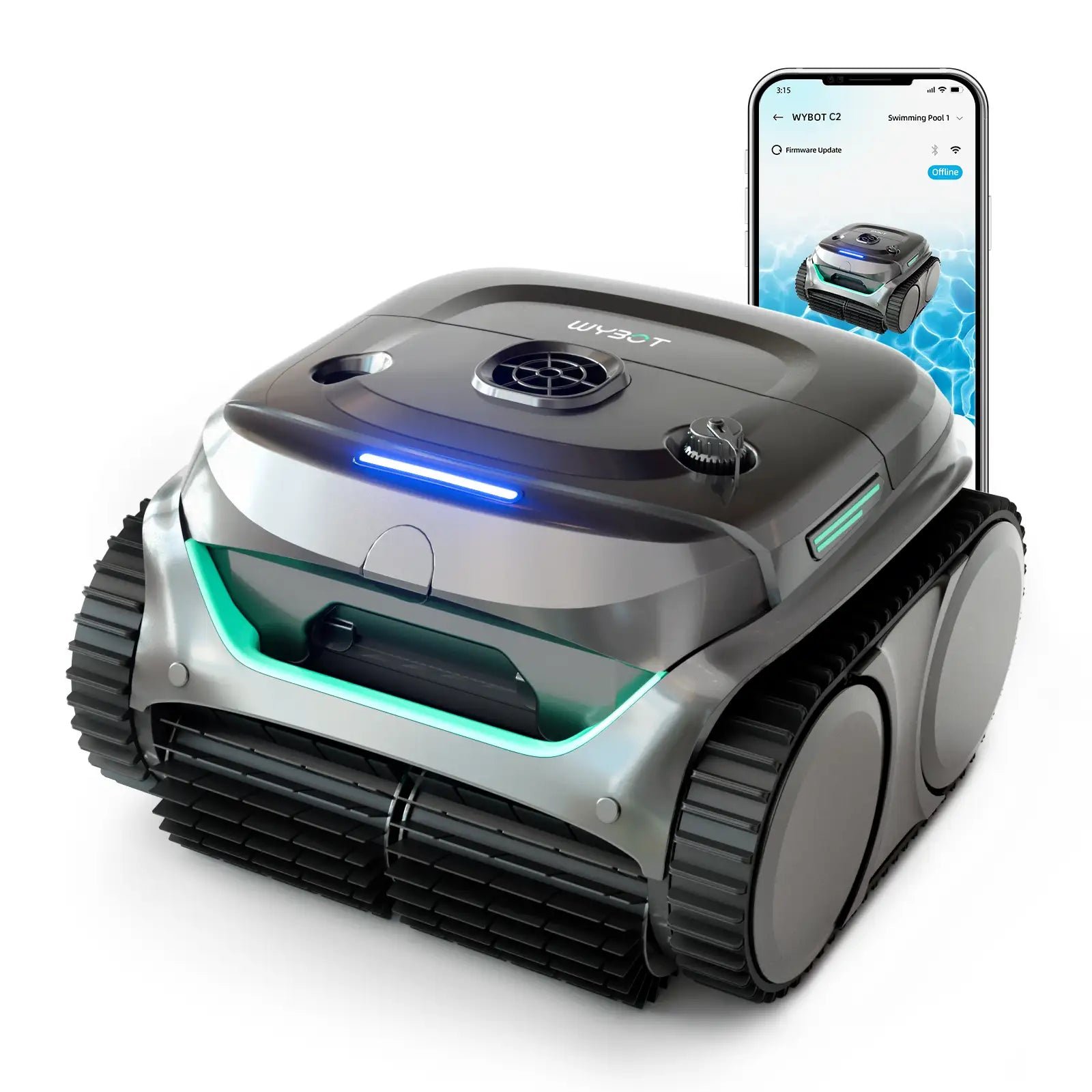
Check price at AiperWybot C2
Cordless · Floor, wall, waterline · Up to 1,615 sq ft · In-ground and above-ground pools
Check price at WybotAiper Scuba X1
Cordless · Floor, wall, waterline · Up to 2,150 sq ft · In-ground and above-ground pools
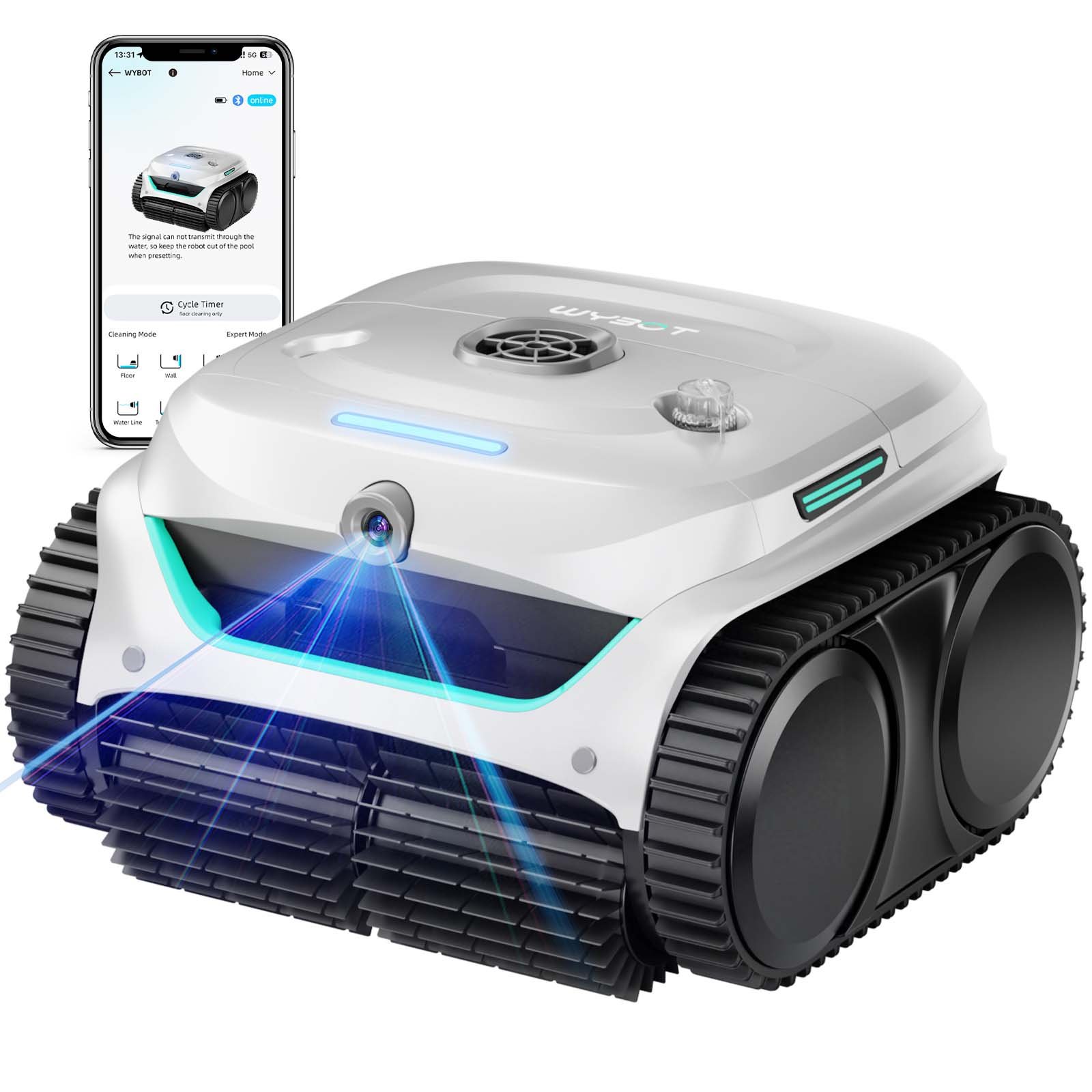
Check price at AiperWybot C2 Vision
Cordless · Floor, wall, waterline · Up to 1,938 sq ft · In-ground and above-ground pools
Check price at Wybot
Aiper Scuba S3
Cordless · Floor, wall, waterline · Up to 1,600 sq ft · In-ground and above-ground pools
Check price at AiperAiper Scuba V3 Ultra
Cordless · Floor, wall, waterline, surface · Up to 3,875 sq ft · In-ground and above-ground pools
Check price at Aiper
Do You Need a Specialized Cleaner?
You might not need a dedicated cleaner for each type of debris. Instead, many robotic pool cleaners are designed with interchangeable filter baskets or dual-layer filters, allowing one unit to adapt to various debris challenges.
Use a coarse mesh filter (150–200μm) for big debris like leaves or acorns 🍁
Swap in an ultra-fine mesh basket (10–50μm) for dust, silt, and pollen 🧼
Some premium cleaners offer dual-stage filtration, capturing both types in one pass
Other models notify you when the tray is full, so you never miss a cleaning cycle
Rather than focusing only on suction strength, focus on filtration flexibility if your pool experiences variable conditions.
🟦 Recommended Reading: What Do Pool Cleaners Actually Clean?
Features That Help with Specific Debris
For Leafy Pools
Wide intake ports that don’t choke on twigs or flower petals
Large-capacity baskets (especially top-load) reduce the need to empty mid-cycle
Strong drive systems help the robot keep moving even when carrying heavy debris loads
For Dusty or Sandy Pools
Ultra-fine filter mesh ranging from 10–70μm
Active brushes to loosen fine dust and pollen from surfaces
Sealed circulation systems prevent debris from bypassing the filter basket
For All-Around Use
Dual-layer filters capture both large and fine debris
Programmable cleaning cycles let you customize runtime for daily, weekly, or seasonal use
Wall-climbing ability to remove debris stuck on vertical surfaces or steps
🟦 Recommended Reading: How Often Should You Use a Robotic Pool Cleaner?
Real-World Examples: Matching Cleaners to Debris
Have a pool under maple or oak trees? Choose a unit with massive intake ports and 200μm baskets
In desert or windy areas? Look for a fine-mesh model capable of picking up 10–30μm particles
For coastal homes with sand and leaves: get a robot with dual filters and heavy-duty drive treads
If your pool sees light usage with mixed debris, a mid-tier model with interchangeable filters should suffice
🟦 Recommended Reading: Active vs Passive Brushes in Robotic Pool Cleaners: What’s Best for Inground Pools?
Getting a Heavy Leaf Load Out Before the Robot Runs
After a storm, or in the weeks when the trees drop most of their leaves, a pool can hold more than a robot’s filter takes in one run. If your pool sits under heavy trees, it usually helps to take the bulk out by hand before the robot goes in.
- Skim the surface first. A leaf net lifts out the leaves that are still floating, before they sink and add to the pile on the floor.
- Lift the pile on the floor. A leaf rake or a leaf bagger on a pool pole takes up the thick layer that has settled, which could otherwise fill a robot’s filter in a single pass.
- Empty the skimmer and pump baskets. Clear baskets keep water moving through the pool’s own filtration while you work.
- Then start the robot. It collects what is left, such as scattered leaves and smaller bits the rake missed.
The order matters because a filter that fills in the first minutes cuts the run short, and the rest of the pool is left as it was. Taking the heavy load out first gives the robot a fair chance to finish its whole route in one go.
What to Do When a Robotic Pool Cleaner Clogs With Leaves
A robot that is clogged with leaves usually shows it. It may slow down or stop partway through a run, struggle to climb the walls, or sit at the waterline instead of finishing its route. Some robots also tell you directly, through an alert in the app or a full-filter indicator that the manual describes.
To clear it:
- Switch the robot off and take it out of the pool.
- Open it and empty the filter.
- Rinse the mesh with a garden hose. Check the manual before you aim a strong jet at a fine mesh, since some makers ask for a gentler rinse.
- Clear wet leaves, pine needles and twigs from the intake and from the tracks or wheels, where they can wrap around moving parts.
To keep it from happening again in leaf season, run shorter cycles and empty the filter after every run, even when it does not look full. Taking the heavy load out by hand first, as described above, also helps. If the robot came with a coarse basket and a fine one, use the coarse basket while the leaves are falling, because a fine mesh blocks sooner. A filter that clogs again soon after cleaning may be worn, so check the manual for the replacement parts the maker sells.
Final Advice
Picking the right robotic cleaner depends more on how and what your pool collects, not just pool size. If your main challenge is leaves, go for wide-mouth intakes and larger debris baskets. If you’re dealing with fine sediment, don’t skimp on filter quality.
Robotic cleaners with modular or dual-stage filtration, strong suction, and brush systems will suit most pools. Just make sure to clean the filters regularly and switch between fine and coarse options as your seasonal debris changes.
Compare Cleaners by Debris Type and Filter Options
Looking for something simple? Check out our page on floor-only robotic cleaners. These budget-friendly models stick to the pool floor, making them a great choice if you just want debris gone without the extras.
Want more than just floor cleaning? Explore our page on advanced robotic cleaners that scrub the walls and waterline too.
Or if you want to see all the models we cover, use our filters to compare:
Fine mesh vs coarse mesh compatibility
Basket access (top-load or chassis-integrated)
Pool size and surface compatibility
Navigation type and more
Frequently Asked Questions
Can a robotic pool cleaner pick up leaves?
Yes, once the leaves have sunk. Makers rate robotic pool cleaners for large debris such as leaves on the floor, and for the walls, steps and waterline when they list those surfaces among the ones the robot cleans. Leaves that are still floating are out of its reach, so a skimmer or a leaf net needs to take them off the surface first.
Which filter suits a pool full of leaves?
A coarse filter that comes out from the top. A top-access filter is quicker to empty when leaves fill it, and the coarse mesh described above is the type meant for leaves and twigs. A fine filter tends to load sooner under leaves, so if your robot comes with both, use the coarse basket during leaf season.
How often should I empty a robotic pool cleaner's filter in the fall?
After every run in a pool that collects leaves. Leaves fill a filter quickly, and a full filter can cut a cleaning run short. Empty it sooner if the app or the manual's indicator says it is full. Taking the heavy load out with a net or a leaf rake first also leaves the filter with less to hold.
Do I still need a skimmer if I have a robotic pool cleaner?
Often yes, if trees drop leaves over your pool. A skimmer takes floating leaves off the surface before they sink, and the robot cleans up the ones that reach the floor. Without a skimmer, more leaves sink and the robot's filter fills sooner, so it may need emptying more often or stop partway through a run.
👉 Next Steps
Today’s deals: robots the brands’ own stores sell at least 5% below their regular price.
Robot picker: answer a few questions and see the models that fit your pool.
Robot guides: each robot’s specs, who it suits and how it compares.
Robots With Two Filters
Aiper Scuba S1
Cordless · Floor, wall, waterline · Up to 1,600 sq ft · In-ground and above-ground pools
Check price at AiperWybot C2
Cordless · Floor, wall, waterline · Up to 1,615 sq ft · In-ground and above-ground pools
Check price at WybotAiper Scuba X1
Cordless · Floor, wall, waterline · Up to 2,150 sq ft · In-ground and above-ground pools
Check price at AiperWybot C2 Vision
Cordless · Floor, wall, waterline · Up to 1,938 sq ft · In-ground and above-ground pools
Check price at WybotAiper Scuba S3
Cordless · Floor, wall, waterline · Up to 1,600 sq ft · In-ground and above-ground pools
Check price at AiperAiper Scuba V3 Ultra
Cordless · Floor, wall, waterline, surface · Up to 3,875 sq ft · In-ground and above-ground pools
Check price at Aiper